Connor Bedard Net Worth 2026 - The Generational Talent Already Building a Fortune Before His Prime
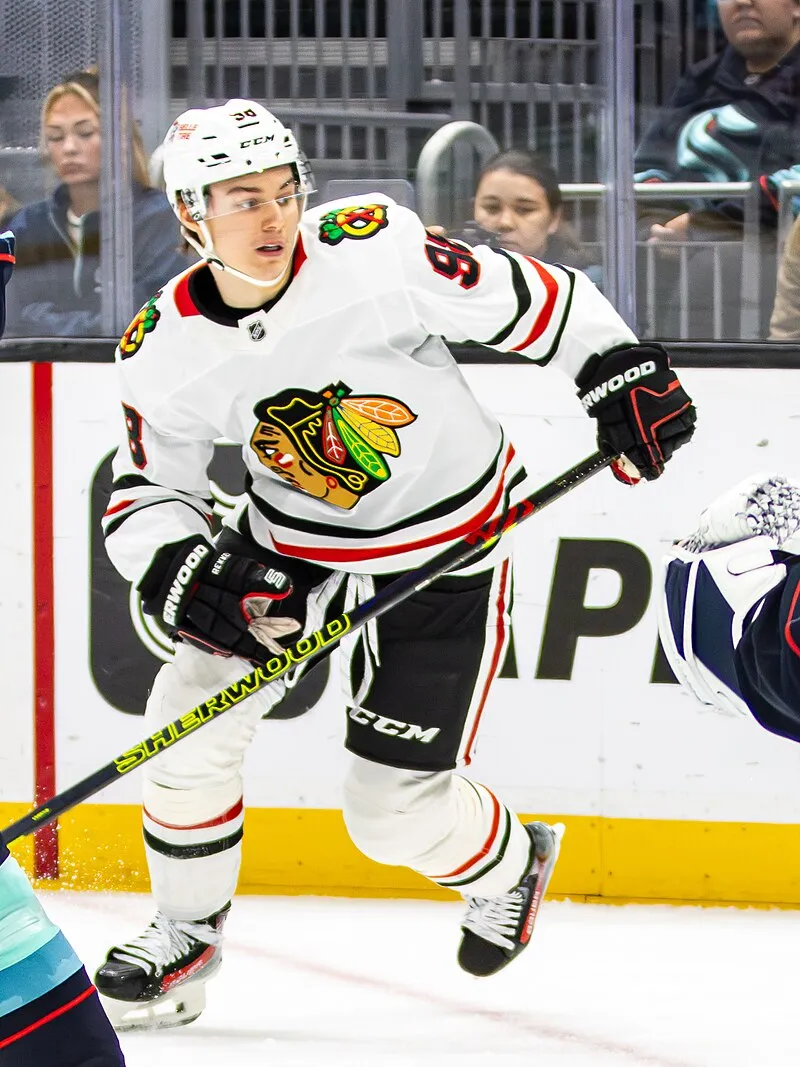
Photo of Connor Bedard, via Wikimedia Commons
The term "generational talent" is applied liberally in professional sports and almost always prematurely. In the case of Connor Bedard, the designation arrived with unusual consensus and has only been reinforced by his early NHL performances. Selected first overall by the Chicago Blackhawks in the 2023 draft, Bedard entered professional hockey carrying a weight of expectation rarely placed on any athlete — and the commercial machinery surrounding elite prospects has ensured that his financial trajectory is already well established before he reaches his athletic prime.
At 20 years old, Bedard's estimated net worth stands at approximately $8 million — a figure that will appear modest against the nine-figure wealth of established superstars profiled on this site, but one that is growing at a rate that makes it among the most dynamic financial stories in the sport today.
The Draft That Defined a Franchise — and Launched a Brand
The 2023 NHL Draft was, in commercial terms, as much a marketing event as a roster-building exercise. Bedard's selection by Chicago was one of the most anticipated moments in the sport's recent history, generating media coverage that extended well beyond traditional hockey audiences and reached the American sports mainstream in a manner that few draft picks ever achieve.
The Blackhawks, a franchise with one of the largest and most passionate fan bases in the United States, recognized immediately that they had acquired not just a franchise player but a generational marketing asset. The organization's promotional apparatus — already sophisticated from the Jonathan Toews and Patrick Kane era — mobilized quickly around Bedard's arrival.
For Bedard himself, the draft day moment was the commercial starting gun. Within weeks of his selection, negotiations were underway not just with the Blackhawks on his playing contract but with multiple equipment manufacturers, apparel brands, and consumer product companies eager to align with the next face of hockey.
Entry-Level Contract: The Structured Foundation
Bedard's entry-level contract with Chicago is structured at the maximum allowable value under the current CBA — approximately $925,000 in base salary per season, supplemented by performance bonuses that can push total compensation significantly higher for players who achieve statistical thresholds.
For a player of Bedard's production level, those bonuses are not theoretical. His rookie season demonstrated the kind of offensive output that triggers bonus clauses, and his total first-year compensation is estimated to have exceeded $2.5 million when bonuses are factored in. Over the full three-year entry-level term, his playing compensation from Chicago is projected to approach $7–8 million before he reaches his first unrestricted free agent negotiation.
The entry-level structure, while deliberately suppressive of earning potential for elite young players, has served Bedard in one important respect: it has created a clear and well-publicized gap between his market value and his actual compensation — a gap that will make his first long-term extension negotiation one of the most significant in recent NHL history.
Industry projections suggest Bedard's next contract will carry an average annual value of $12–14 million or higher, potentially establishing a new benchmark for young forwards and placing him among the five highest-paid players in the league before his 24th birthday.
Endorsement Deals: The Real Financial Engine
For elite prospects of Bedard's caliber, endorsement income frequently dwarfs playing compensation during the entry-level years — and his portfolio reflects that dynamic clearly.
His most significant commercial relationship is with CCM Hockey, which signed him to a long-term equipment deal that is reported to be among the most valuable in the company's history for a player of his age and experience. The arrangement covers sticks, skates, gloves, and protective equipment, and includes co-branded marketing campaigns, retail activations, and digital content production. Sources familiar with the hockey equipment industry estimate the annual value of the deal at $1.5–2 million.
Beyond equipment, Bedard has attracted the attention of mainstream consumer brands that recognize hockey's growing American audience. He has been associated with apparel and lifestyle partnerships that extend his commercial reach beyond the sport's traditional demographic, and his social media following — which grew explosively in the months surrounding his draft — provides the kind of organic audience that brands value highly.
Total annual endorsement income is estimated at $3–4 million, a figure that already places him among the top earners in the league on a non-playing basis and one that will scale significantly as his on-ice profile continues to develop.
The Chicago Platform: Rebuilding in the Spotlight
Bedard's commercial trajectory is meaningfully influenced by the market in which he plays. Chicago is the third-largest media market in the United States, and the Blackhawks' ownership group — which includes significant resources and a demonstrated willingness to invest in player marketing — provides an infrastructure that smaller-market franchises cannot match.
The franchise's rebuilding phase, while challenging on the standings side, has paradoxically elevated Bedard's individual visibility. In a team context where the spotlight is not shared with multiple established stars, every Bedard highlight generates outsized media attention. His performances are covered not just by Chicago sports media but by national outlets that frame him as the singular reason to watch the Blackhawks — a dynamic that sustains brand relevance even through a developmental roster period.
Digital Brand and Media Presence
One dimension of Bedard's financial story that distinguishes him from previous generations of young NHL stars is the sophistication with which his brand has been managed across digital platforms. His team of advisors has ensured a consistent and carefully curated presence across social media channels, and the content strategy surrounding his personal brand reflects an understanding of modern sports marketing that previous generations of hockey players simply did not have access to.
Revenue from social media partnerships, sponsored content, and digital activations contributes an estimated $500,000–$1 million annually to his income — a modest figure today but one with significant growth potential as his following expands and his platform matures.
Investment Strategy: Building for the Long Term
Bedard's financial advisors have been explicit in interviews about their approach to wealth management: the goal is to build structures now that will compound over a career expected to span 15–20 years. Current investment activity is understood to focus primarily on diversified market instruments and conservative real estate exposure, consistent with a long time horizon and a recognition that the most significant wealth accumulation will occur during the earning peak of his mid-to-late career.
Florida real estate has been identified as a potential area of interest given its tax advantages for high-income athletes, though Bedard's primary residence remains in the Chicago area during the season.
The $8 Million Starting Point
Connor Bedard's $8 million net worth in 2026 is best understood not as a destination but as a baseline — the financial foundation constructed before his career reaches full velocity. Every projection model applied to his trajectory points toward a lifetime earning potential that will comfortably exceed $200 million if he maintains his current production levels through a full career.
He is, in the most precise financial sense, a growth asset in the earliest stages of his appreciation curve. The hockey world is watching what he does on the ice. The financial world is watching what he builds off it.