Wayne Gretzky Net Worth 2026 - The Great One's $250 Million Post-Playing Career Fortune
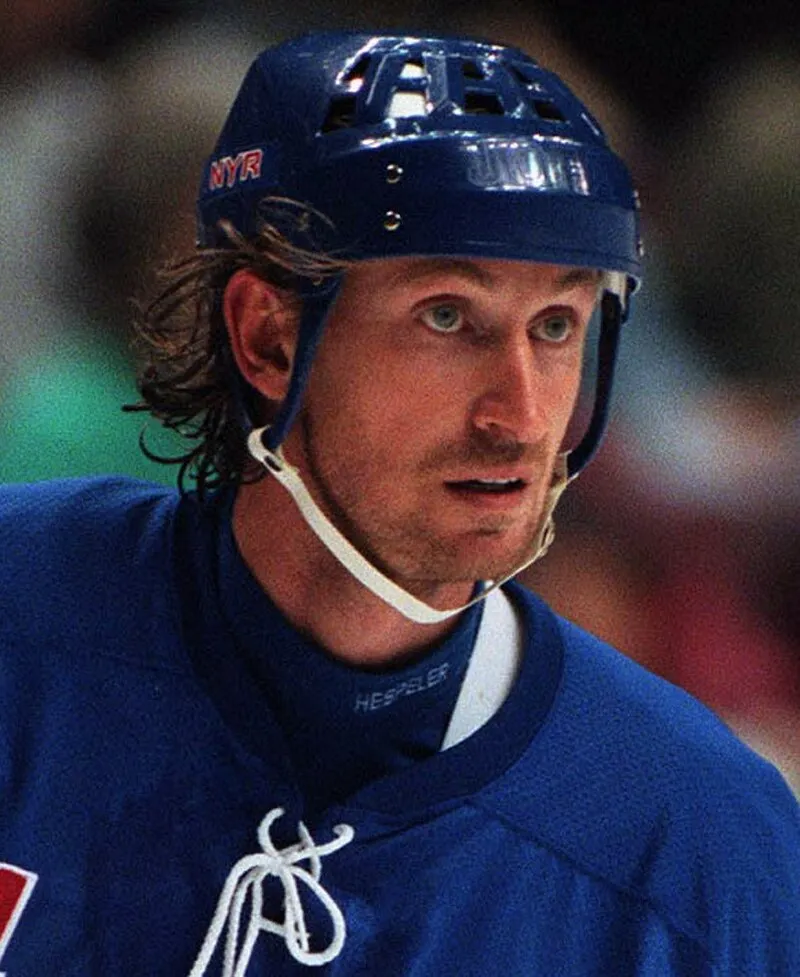
Photo of Wayne Gretzky, via Wikimedia Commons
When Wayne Gretzky hung up his skates on April 18, 1999, at Madison Square Garden, the hockey world mourned the end of an era. What it did not fully appreciate was that Gretzky was simply pivoting to a new arena — the world of business, broadcasting, and brand building. In 2026, The Great One carries an estimated net worth of $250 million, a figure that dwarfs the earnings of many active NHL stars and stands as a testament to how completely he has dominated every chapter of his life.
A Playing Career That Set the Financial Foundation
Before examining what Gretzky built after hockey, it is worth understanding the foundation he started with. Over 20 NHL seasons — with the Edmonton Oilers, Los Angeles Kings, St. Louis Blues, and New York Rangers — Gretzky accumulated career earnings estimated between $40 million and $50 million in salary alone. By the standards of his era, he was among the highest-paid players in the sport, but those figures look modest compared to the contracts modern stars command.
His 1988 trade from Edmonton to Los Angeles, engineered in part by owner Peter Pocklington for a reported package worth roughly $18 million in cash and player assets, remains one of the most consequential transactions in professional sports history. It brought hockey to a new American market, elevated the Kings' profile overnight, and, critically for Gretzky, positioned him in one of the most commercially fertile cities on earth.
By the time he retired, Gretzky held virtually every meaningful NHL scoring record — 61 of them, by most counts. That statistical monopoly became the cornerstone of a personal brand with essentially no peer in the sport.
Ownership and the Phoenix Years
Gretzky's first major post-playing financial move was a high-profile one. In 2000, he joined a group of investors who purchased the Phoenix Coyotes, and he subsequently served as head coach of the franchise from 2005 to 2009. The venture was financially turbulent — the Coyotes struggled commercially throughout his tenure, and the franchise ultimately entered bankruptcy proceedings in 2009. Gretzky's ownership stake was largely wiped out in the reorganization, representing one of the few setbacks in his otherwise disciplined financial career.
The lesson was not lost on him. In subsequent years, Gretzky has been considerably more selective about where he places his capital, gravitating toward ventures with proven consumer demand and lower structural risk.
Broadcasting and Media Revenue
Gretzky's face and voice have remained fixtures in hockey media for decades. His long-running association with Turner Sports and TNT's NHL coverage — before the league's rights shifted — gave him a platform that kept him relevant to new generations of fans. Analysts estimate that his cumulative broadcasting and media contracts have generated somewhere between $15 million and $25 million over the years, though Gretzky has characteristically kept the precise terms private.
His appeal to networks is straightforward: there is simply no one in hockey whose name recognition transcends the sport the way his does. In the United States, where hockey has historically struggled for mainstream attention, Gretzky functions as a crossover figure capable of drawing viewers who might otherwise ignore the sport entirely.
Wayne Gretzky Estates: Building a Wine Empire
Perhaps the most surprising pillar of Gretzky's post-playing wealth is wine. Launched in partnership with his family in Ontario's Niagara Peninsula wine country, Wayne Gretzky Estates has grown into one of Canada's most recognized wine and spirits brands. The label produces a wide range of wines, ciders, and a popular whisky line that has found distribution across North America.
Industry observers estimate the brand generates annual revenues in the range of $30 million to $50 million, and Gretzky's equity stake — while not publicly disclosed — is believed to represent a meaningful portion of his overall net worth. The venture benefits enormously from the Gretzky name's global recognition, allowing the brand to command shelf placement and consumer attention that a similarly sized operation without his backing could never achieve.
The winery also operates a restaurant and retail destination in Niagara-on-the-Lake, Ontario, which has become a significant tourism draw and adds an additional revenue stream beyond wholesale distribution.
Real Estate and Personal Investments
Gretzky and his wife, actress Janet Jones, have maintained a substantial real estate portfolio for decades. Properties in Los Angeles, Arizona, and Canada have collectively appreciated considerably over the years. Their primary Bel-Air residence alone is valued by real estate analysts at north of $20 million, and previous properties they have owned and sold in the Los Angeles market generated significant capital gains during the region's prolonged real estate boom.
Beyond real estate, Gretzky has invested in a diversified portfolio of equities and private holdings, the details of which remain largely out of public view. What is known is that he has been advised by sophisticated financial managers throughout his post-playing career, a sharp contrast to the stories of financial mismanagement that have plagued many former professional athletes.
Endorsements: Decades of Brand Partnerships
Gretzky's endorsement history is as long as his list of records. During his playing days, he was associated with brands including Coca-Cola, Upper Deck, Nike, and Titan Hockey. Post-retirement, those relationships evolved rather than evaporated. His partnership with Upper Deck as an exclusive autograph signer and brand ambassador has endured for over two decades, generating consistent annual income estimated between $1 million and $3 million per year.
Additionally, Gretzky has served as a spokesperson and ambassador for financial institutions, automotive brands, and lifestyle companies targeting the affluent consumer demographic — a natural fit given his image and the audience he commands. Total lifetime endorsement earnings are estimated to exceed $50 million.
The Gretzky Legacy and Ongoing Valuations
In 2026, Wayne Gretzky's financial position reflects the compound effect of decades of disciplined brand management, selective investment, and the irreplaceable asset of his name. His memorabilia commands extraordinary prices at auction — a signed jersey from his Edmonton years can fetch upward of $50,000, and his rookie cards rank among the most valuable in all of hockey collecting.
The broader estimate of $250 million accounts for his wine and spirits business equity, real estate holdings, investment portfolio, ongoing media and endorsement income, memorabilia royalties, and the residual value of a personal brand that, nearly 27 years after his retirement, shows no meaningful signs of depreciation.
For a sport that has sometimes struggled to produce transcendent crossover figures in the American market, Gretzky remains the gold standard — not just as a player, but as a blueprint for how athletic greatness, carefully stewarded, can translate into generational financial security. The records he set on the ice may never be broken. The empire he built off it may prove equally enduring.