Gordie Howe Net Worth 2026 - The Staggering True Value of Mr. Hockey's Lifetime Legacy
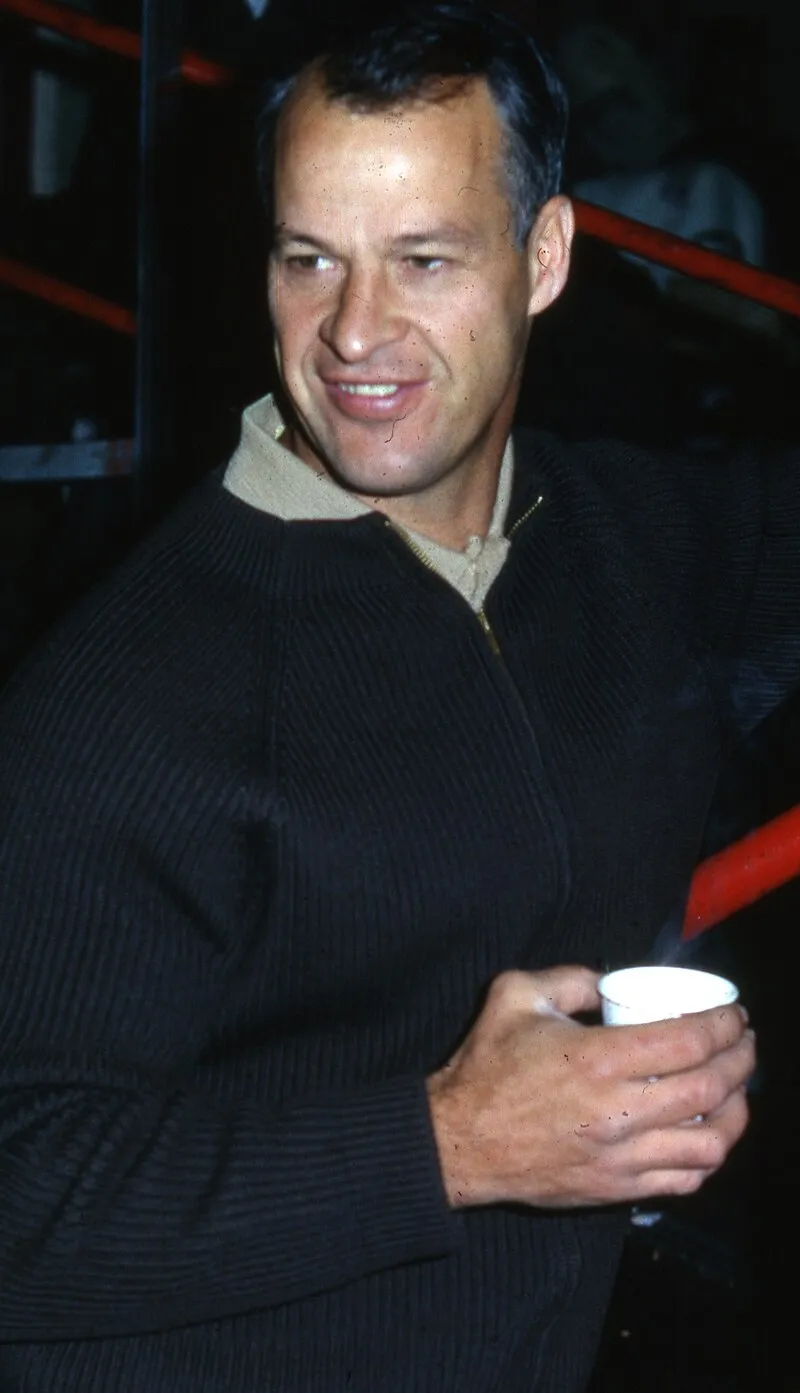
Photo of Gordie Howe, via Wikimedia Commons
Gordie Howe Net Worth 2026 - The Staggering True Value of Mr. Hockey's Lifetime Legacy
In any honest conversation about the greatest hockey players in history, Gordie Howe belongs at the very top of the discussion. Five decades of professional play. Four Stanley Cup championships. Six Hart Trophies. A career so long and so dominant that he skated on the same NHL ice as his own sons. And yet, when the ledgers are examined with clear eyes, "Mr. Hockey" was one of the most egregiously underpaid athletes in the history of North American professional sports.
Howe passed away in June 2016 at the age of 88. His estate, managed by his family, continues to generate revenue through licensing, memorabilia sales, and the enduring commercial power of his name. In 2026 dollars, the total estimated value of the Howe legacy — combining inflation-adjusted career earnings, estate assets, and ongoing royalty streams — is placed at approximately $25 million. That figure, while substantial, represents a profound undervaluation relative to the talent it honors.
A Career Spanning Five Decades
Howe played his first NHL game for the Detroit Red Wings in 1946 and his last professional game — in the WHA and then briefly back in the NHL — in 1980. The sheer duration of his career is without parallel in major North American professional sports. But longevity alone does not explain the financial complexity of his story. The era in which he played explains nearly everything.
During the Original Six era, NHL players operated under what was effectively a reserve clause system, binding them to their teams with virtually no leverage to negotiate. Owners held near-total power, and player salaries were suppressed accordingly. Howe's peak salaries with Detroit in the 1950s and 1960s are estimated to have ranged from roughly $15,000 to $30,000 per season — figures that, while above average for the time, were a fraction of what his production would command in any modern labor environment.
Adjusted for inflation using the Consumer Price Index, Howe's career NHL earnings with Detroit from 1946 to 1971 are estimated at approximately $4 million to $6 million in 2026 dollars — a sobering calculation given that a player of comparable dominance today would command $15 million or more annually.
The WHA Chapter and Deferred Justice
When Howe came out of his first retirement in 1973 to join the Houston Aeros of the World Hockey Association — playing alongside sons Mark and Marty — it represented more than a sentimental comeback. The WHA's competition with the NHL had finally begun to break the salary stranglehold that teams had maintained for decades, and Howe negotiated what was, for him, an unprecedented deal.
His WHA contract with Houston was reported to be worth approximately $1 million over four years, with additional family contracts for his sons. In 2026 dollars, that package translates to roughly $6 million to $7 million — more than he had likely earned in comparable spans of his NHL career. The WHA stint was, in a real sense, the first time the marketplace came close to properly compensating Gordie Howe for his value.
His brief return to the NHL with the Hartford Whalers in the 1979-80 season was largely ceremonial, but it added another historical footnote: Howe became the only player to appear in NHL games in five different decades.
What Howe's Career Would Be Worth Today
The exercise of projecting Howe's modern earnings is illuminating. A player of his caliber — six MVP awards, 23 All-Star selections, four championships, elite physical play and offensive production sustained across more than two decades — would almost certainly command a maximum-term contract at the NHL's salary cap ceiling. In the 2025-26 environment, that translates to an annual salary in the range of $13 million to $15 million.
Over a 25-year prime career at those rates, with endorsement income from equipment manufacturers, automotive brands, and national consumer companies, a modern Gordie Howe could conservatively accumulate $400 million to $500 million in career earnings. The gap between that projection and the inflation-adjusted reality of his actual earnings represents one of the most dramatic cases of structural underpayment in sports history.
Licensing, Memorabilia, and the Modern Estate
In death, as in life, Gordie Howe's commercial value has proven remarkably durable. The Howe estate, managed in coordination with family members, continues to generate revenue through several channels.
Autographed memorabilia signed during Howe's lifetime — jerseys, sticks, photographs, and pucks — commands consistent premiums at auction. Authenticated Howe signatures in pristine condition regularly sell for $200 to $800 at reputable auction houses, with game-worn jerseys and equipment fetching significantly more. A game-worn Howe Detroit Red Wings jersey sold at auction in recent years for over $100,000.
Licensing agreements with the NHL, the Hockey Hall of Fame, and various consumer product manufacturers continue to generate royalty income for the estate. The NHL's use of Howe's likeness in historical marketing, video game platforms, and anniversary campaigns produces ongoing revenue estimated at several hundred thousand dollars annually.
The Howe family has also been thoughtful stewards of his brand, participating selectively in documentary projects, book publications, and commemorative merchandise releases that keep his name commercially active without diluting its prestige.
The Human Cost of the Reserve Clause Era
Any financial retrospective on Gordie Howe must grapple honestly with the systemic inequity that defined his era. He was not simply underpaid by bad luck or poor negotiation — he was underpaid by design. The NHL's labor structure was constructed explicitly to prevent players from accessing their fair market value, and Howe, like virtually every player of his generation, had no meaningful recourse.
It was not until Alan Eagleson's tenure as head of the NHL Players' Association — itself later revealed to be deeply corrupt — and eventually Bob Goodenow's more aggressive leadership that players began to capture a more equitable share of league revenues. Howe's generation built the NHL into a viable professional league while receiving a fraction of the economic value they created.
Legacy Value in 2026
The Howe estate's total estimated value in 2026, incorporating remaining memorabilia inventory, licensing rights, real estate assets accumulated during his lifetime, and projected future royalty income, is placed at approximately $25 million. That figure is a respectable legacy by any conventional standard.
But context demands acknowledgment: for the man many credible observers consider the most complete hockey player in the sport's history, $25 million is not a triumph. It is a reminder of how dramatically the economics of professional sports have shifted — and how much was taken from an entire generation of athletes who had no power to demand what they were worth.
Gordie Howe deserved far more. That he built any lasting financial legacy at all, given the structural forces working against him, speaks to the same resilience that made him legendary on the ice.