Leon Draisaitl Net Worth 2026 - Edmonton's German Powerhouse and His $100 Million Financial Blueprint
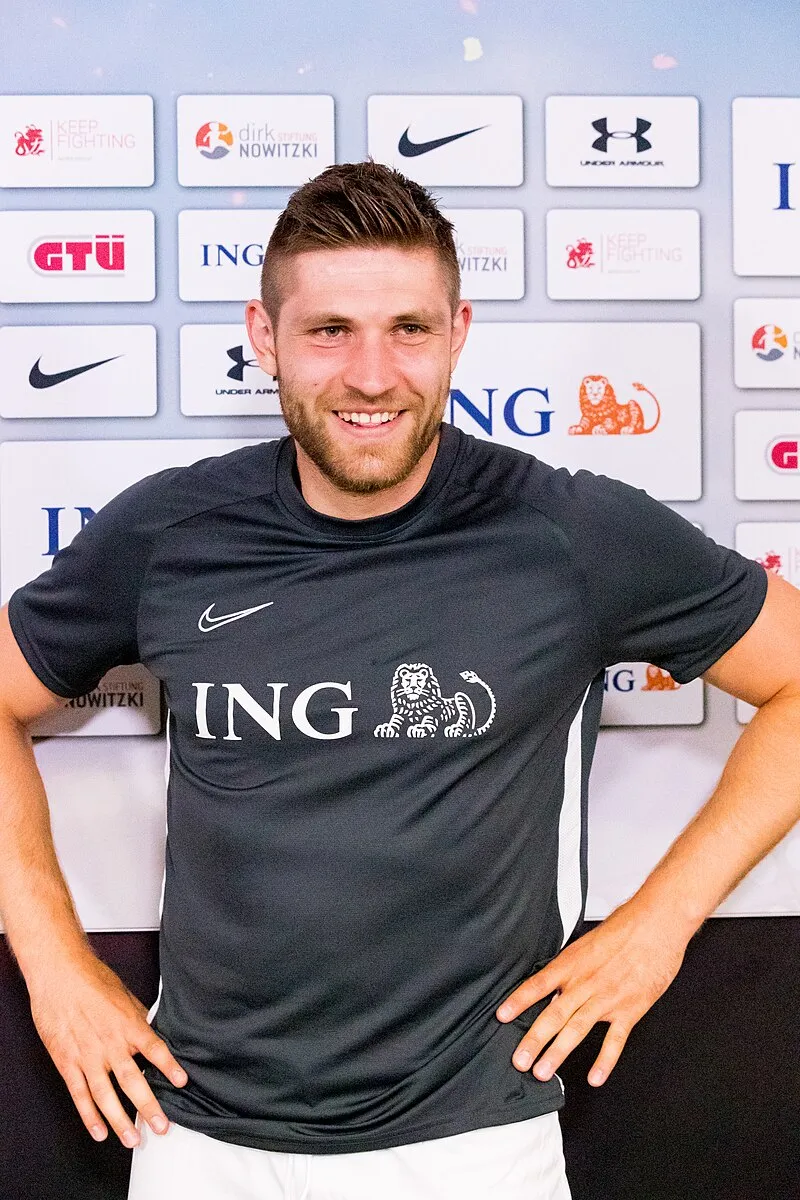
Photo of Leon Draisaitl, via Wikimedia Commons
Leon Draisaitl Net Worth 2026 - Edmonton's German Powerhouse and His $100 Million Financial Blueprint
For most of his NHL career, Leon Draisaitl has operated in the considerable shadow of Connor McDavid. That dynamic is understandable — McDavid is, by the consensus of most hockey analysts, the greatest player of his generation and perhaps of all time. But reducing Draisaitl to a supporting character would be a profound misreading of both his on-ice contributions and his financial standing. The Edmonton Oilers center is, by any objective measure, one of the two or three most valuable players in professional hockey — and his net worth of approximately $100 million in 2026 reflects that reality with precision.
From Cologne to the NHL Draft
Leon Draisaitl was born in Cologne, Germany, in 1995, the son of Peter Draisaitl, a longtime professional hockey player and coach. Growing up in a hockey household in a country where the sport occupies a distant second tier behind soccer gave Leon an unusual developmental path — one that eventually led him to the Western Hockey League's Prince Albert Raiders and, ultimately, to the Edmonton Oilers as the third overall pick in the 2014 NHL Draft.
His entry-level contract paid standard rookie rates, but the organization's investment in developing Draisaitl alongside a young McDavid signaled that the franchise saw him as far more than a complementary piece.
Contract History: A Steady Escalation to Historic Territory
Draisaitl's contract progression tells the story of a player who understood his own value and was willing to negotiate from a position of patience and leverage.
His first significant extension, signed in 2017, was an eight-year deal worth $68 million — an average annual value of $8.5 million. At the time, the contract represented a significant commitment from Edmonton but was widely regarded as a fair reflection of his emerging elite status. What followed, however, exceeded even optimistic projections. Draisaitl won the Hart Trophy as league MVP in 2020, posted multiple 100-plus-point seasons, and established himself as arguably the most dangerous offensive player in the NHL not named Connor McDavid.
In 2025, Draisaitl signed what is widely described as one of the most lucrative contracts in NHL history: an eight-year extension worth $112 million, carrying an average annual value of $14 million. The deal made him the highest-paid player in league history at the time of signing — a distinction that carries both financial and symbolic weight, particularly given that it briefly eclipsed McDavid's own record-setting contract.
Total career NHL earnings through 2026, including all contract phases, are estimated at approximately $75 million to $80 million in gross income.
The McDavid Effect: Blessing and Complication
Draisaitl's financial profile is inextricably linked to his partnership with McDavid, and that relationship cuts both ways from a branding perspective.
On the positive side, playing alongside the sport's most marketable star means Draisaitl has benefited from elevated team visibility, deeper playoff runs, and the kind of primetime exposure that drives jersey sales and endorsement conversations. The Oilers' Stanley Cup championship run has kept both players in the national spotlight for an extended period, and Draisaitl's role as a co-architect of that success has been well documented.
The complication is more subtle. In markets where casual fans follow hockey primarily through star-player narratives, McDavid tends to absorb the majority of the Edmonton oxygen. Endorsement partners seeking a single Oilers ambassador frequently default to McDavid, leaving Draisaitl to build his commercial portfolio through channels that require more deliberate cultivation.
His response to this dynamic has been characteristically methodical: rather than competing directly with McDavid for North American market share, Draisaitl has invested heavily in building a brand that operates on a different axis entirely.
The German Market Advantage
Perhaps the most distinctive element of Draisaitl's financial strategy is his cultivation of the German consumer market — a space where he operates without competition from any comparable hockey personality.
Germany's sports economy is enormous, driven primarily by soccer but increasingly receptive to hockey as the national team has grown in international competitiveness. Draisaitl, as the most prominent German-born player in NHL history and a Hart Trophy winner, occupies a unique position in that landscape. His endorsement partnerships with German and European brands — including equipment and lifestyle companies with limited North American profiles — are estimated to generate $2 million to $3 million annually, a figure that rivals or exceeds what many higher-profile North American stars earn from their domestic endorsement portfolios.
He has also engaged in media partnerships with German sports outlets and streaming platforms, building a sustained presence in his home country that generates both income and long-term brand equity. When the NHL has expanded its European broadcasting footprint, Draisaitl has been a natural ambassador, commanding appearance fees and partnership arrangements that his peers simply cannot access.
His North American endorsement portfolio, which includes deals with CCM Hockey and select lifestyle brands, contributes an estimated additional $1.5 million to $2 million per year, bringing his total annual endorsement income to roughly $3.5 million to $5 million.
Representation and Financial Architecture
Industry observers who follow NHL player finances frequently cite Draisaitl's representation as a model of sophisticated long-term planning. His management team has structured his contracts with careful attention to signing bonus distributions, no-trade clause protections, and tax optimization strategies that account for his dual professional footprint in North America and Europe.
Draisaitl has also been deliberate about business investments, reportedly holding interests in commercial real estate in both the Edmonton area and Germany. While the specific details of his investment portfolio are not publicly disclosed, sources with knowledge of his financial structure indicate that he has prioritized income-producing assets over speculative ventures — a conservative approach consistent with his personality both on and off the ice.
Real Estate and Personal Assets
Draisaitl owns a primary residence in the Edmonton metropolitan area, a property estimated at approximately $3 million to $4 million in current market value. He has also maintained connections to real estate in Germany, where family ties have informed selective property investments in the Cologne region.
His personal spending profile is notably modest relative to his income level. Unlike some peers who invest heavily in luxury goods, vehicles, and high-profile lifestyle expenditures, Draisaitl has maintained a relatively low public profile away from the rink — a disposition that, incidentally, tends to preserve wealth more effectively than conspicuous consumption.
Net Worth Estimate and Trajectory
Aggregating his career contract income, current contract value, endorsement revenue, real estate holdings, and investment returns, Draisaitl's estimated net worth in 2026 stands at approximately $100 million. With eight more years remaining on his current contract at $14 million annually, and with endorsement income likely to grow as his German-market profile continues to expand, his total lifetime earnings could approach or exceed $300 million before his playing career concludes.
For a player who spent years being described primarily in relation to someone else, Leon Draisaitl has built a financial identity that is entirely, and impressively, his own.